Boost Efficiency with Automation for All Industries
Optimize your workflows – automate recurring processes and save time as well as labor costs. Maximize your productivity!

Optimize your workflows – automate recurring processes and save time as well as labor costs. Maximize your productivity!
Optimize your workflows – automate recurring processes and save time as well as labor costs. Maximize your productivity!

Gain valuable insights – automated data collection and analysis for informed decision-making. Get started today!

Extract and analyze data from PDFs – quickly, accurately, and without manual errors or human intervention. Automate now!

Optimize your workflows – automate recurring processes and save time as well as labor costs. Maximize your productivity!
Optimize your workflows – automate recurring processes and save time as well as labor costs. Maximize your productivity!
Gain valuable insights – automated data collection and analysis for informed decision-making. Get started today!
Extract and analyze data from PDFs – quickly, accurately, and without manual errors or human intervention. Automate now!
Automation of Business Processes




Faster, smarter, cheaper – powered by our automation solution.

Staff Replaced
Error Rate Achieved
Faster Processes
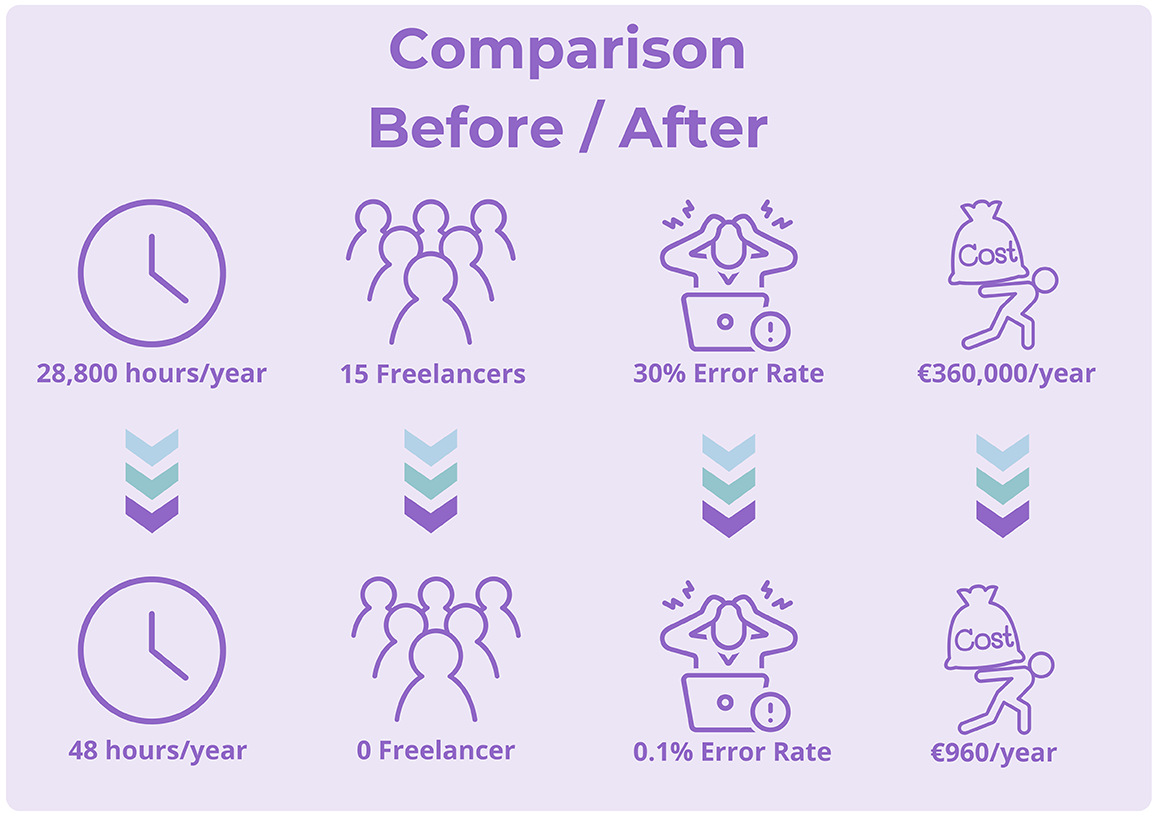
By automating lead generation processes, we have eliminated manual tasks, reduced costs by €359,040 per year, lowered the error rate to 0.1%, and minimized processing time from 28,800 hours to just 48 hours per year.
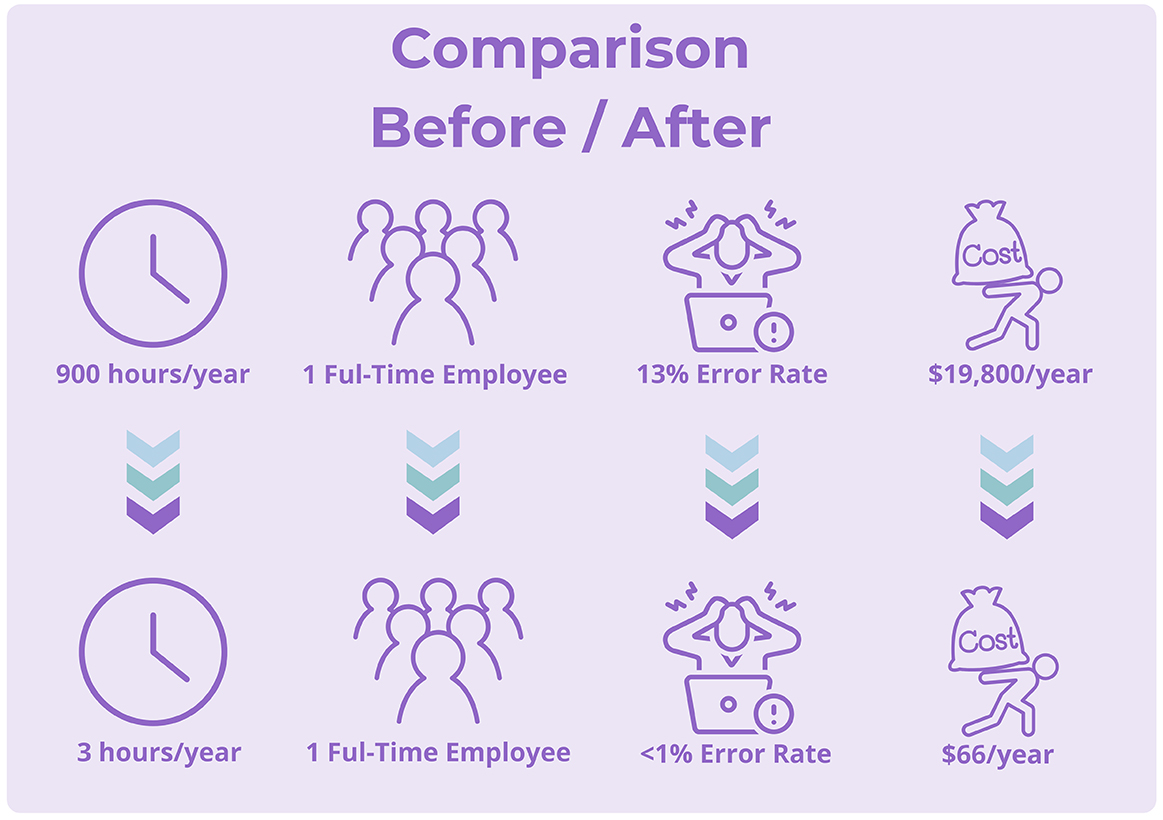
Automation replaced invoice verification, data entry, and validation, reducing annual workload from 900 to 3 hours and cutting costs from €19,800 to €66. The error rate dropped below 1%, optimizing efficiency and data quality.
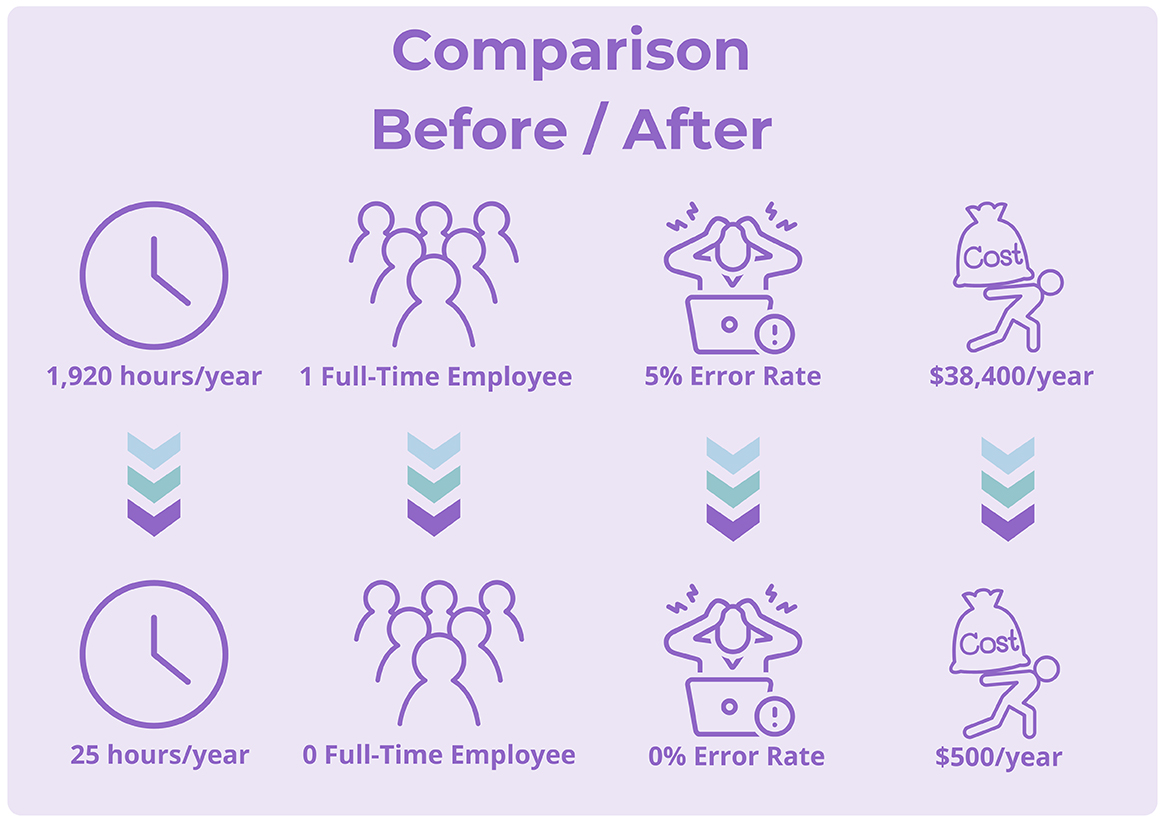
Automation replaces manual updates, reducing annual workload from 1,920 to 25 hours and cutting costs from €38,400 to €500. Accurate, error-free data enables rapid adjustments, ensuring a competitive edge.
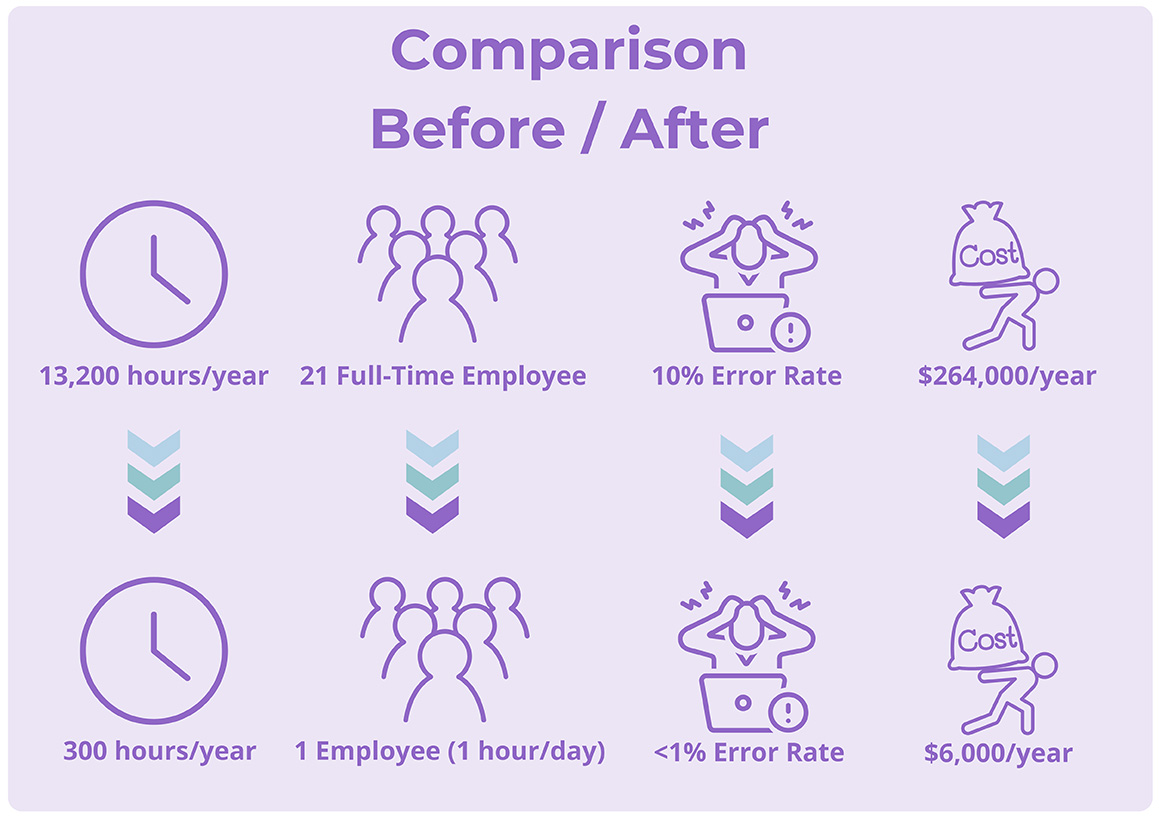
By automating job acquisition, manual task searching was eliminated, reducing annual workload from 13,200 to 330 hours and cutting costs from €264,000 to €6,000. Faster response times secure more contracts and sustainably boost revenue.
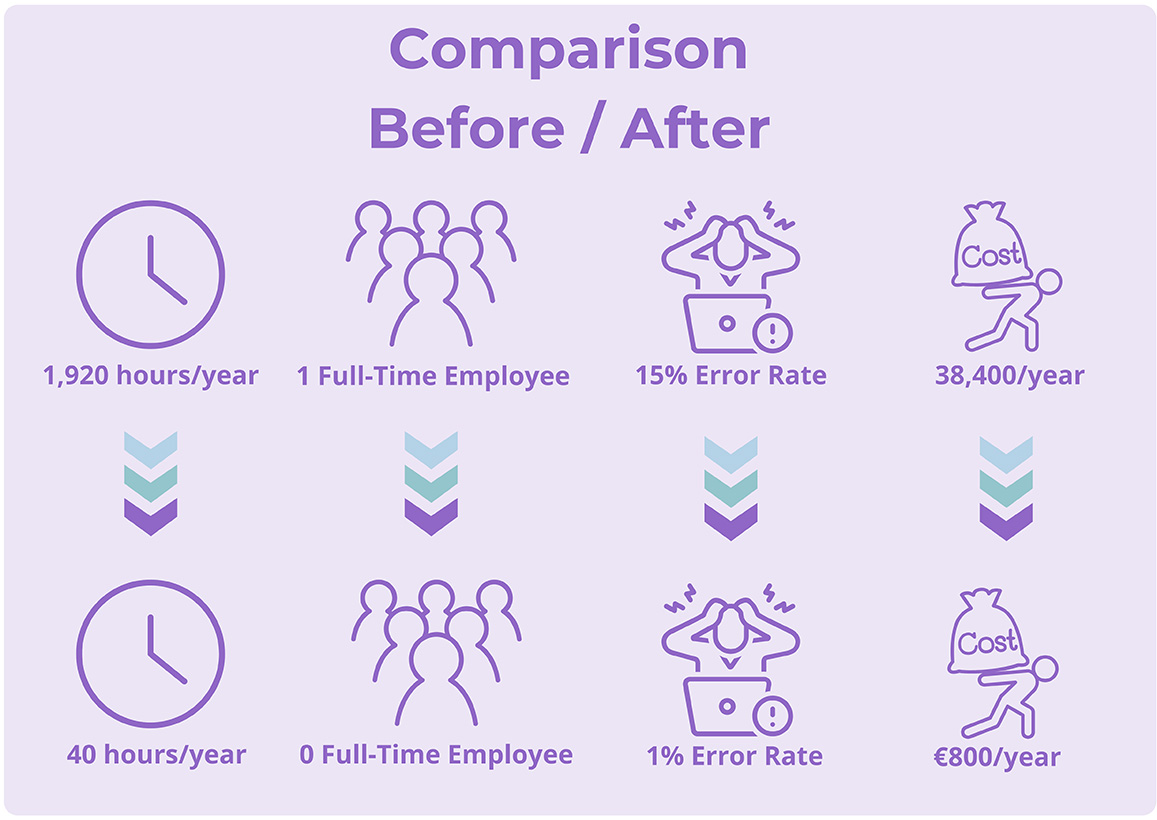
The automation of manual job search processes optimized workflows, eliminated full-time positions, saved 1,880 hours per year, and reduced costs by €37,600 annually while ensuring the highest level of data accuracy.
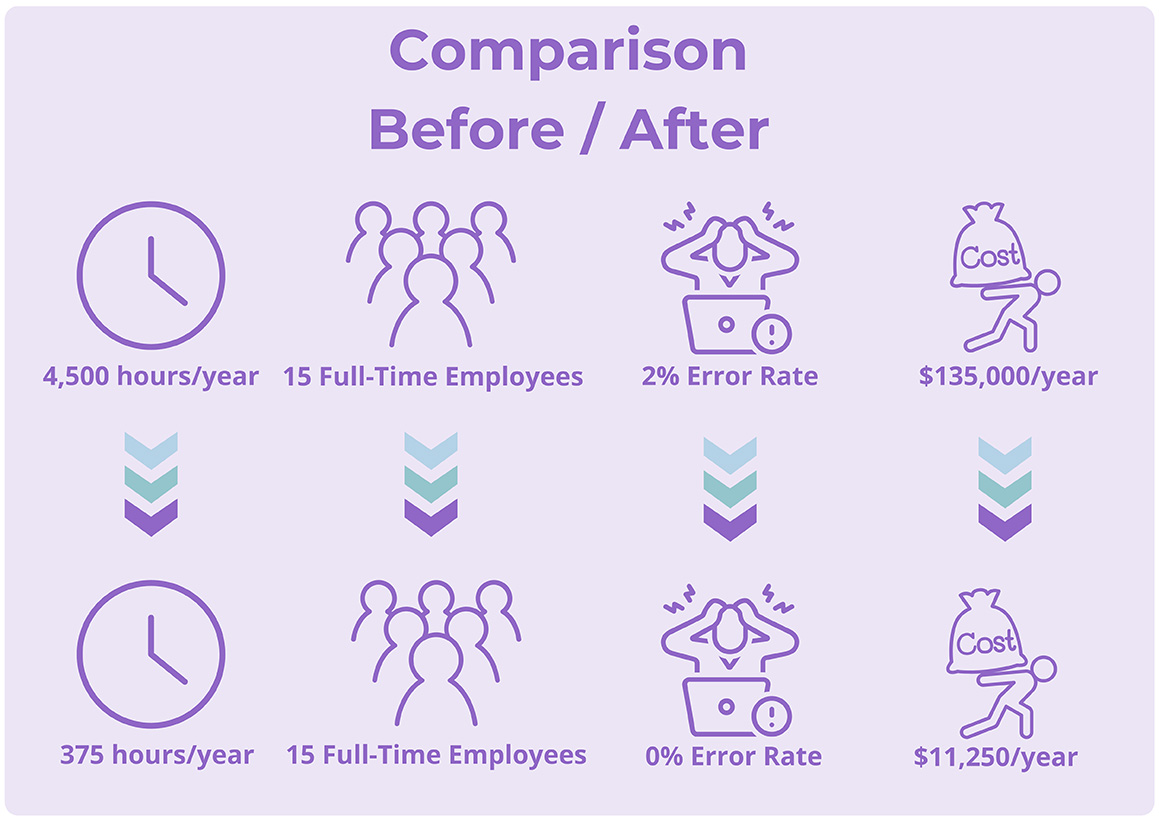
Automation of customer intake, vehicle inspection, and project management reduced annual workload from 4,500 to 375 hours and lowered administrative costs from €135,000 to €11,250. Error-free data processing enhances efficiency, service quality, and competitiveness.
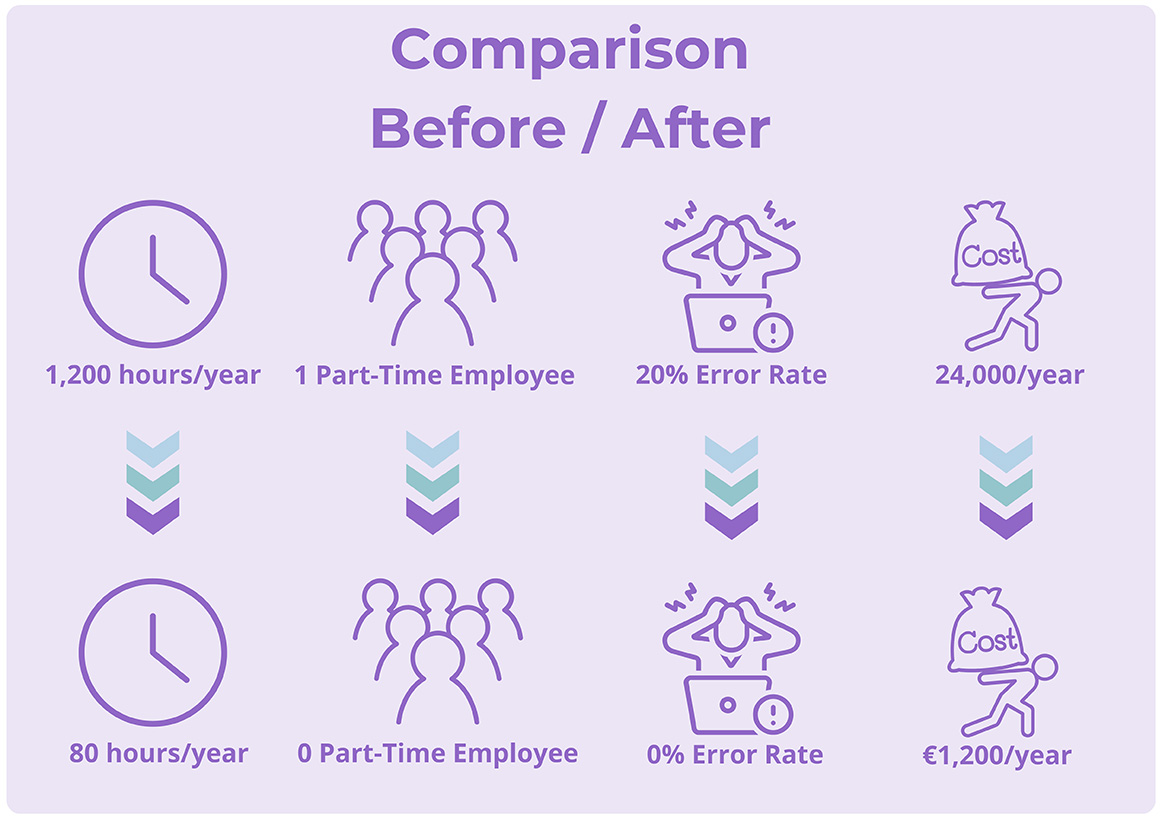
We have automated the creation of CRM folders, distribution lists, and the sending of emails, saving 1,120 hours per year, reducing costs by €22,800 per year, and achieving 100% error-free processes.

Discover how our innovative solutions are transforming businesses. Dive into our case studies for insights, proven results, and inspiration for your next project.
Staff Replaced
Error Rate Achieved
Faster Processes
By automating lead generation processes, we have eliminated manual tasks, reduced costs by €359,040 per year, lowered the error rate to 0.1%, and minimized processing time from 28,800 hours to just 48 hours per year.
Automation replaced invoice verification, data entry, and validation, reducing annual workload from 900 to 3 hours and cutting costs from €19,800 to €66. The error rate dropped below 1%, optimizing efficiency and data quality.
Automation replaces manual updates, reducing annual workload from 1,920 to 25 hours and cutting costs from €38,400 to €500. Accurate, error-free data enables rapid adjustments, ensuring a competitive edge.
By automating job acquisition, manual task searching was eliminated, reducing annual workload from 13,200 to 330 hours and cutting costs from €264,000 to €6,000. Faster response times secure more contracts and sustainably boost revenue.
The automation of manual job search processes optimized workflows, eliminated full-time positions, saved 1,880 hours per year, and reduced costs by €37,600 annually while ensuring the highest level of data accuracy.
Automation of customer intake, vehicle inspection, and project management reduced annual workload from 4,500 to 375 hours and lowered administrative costs from €135,000 to €11,250. Error-free data processing enhances efficiency, service quality, and competitiveness.
We have automated the creation of CRM folders, distribution lists, and the sending of emails, saving 1,120 hours per year, reducing costs by €22,800 per year, and achieving 100% error-free processes.
Discover how our innovative solutions are transforming businesses. Dive into our case studies for insights, proven results, and inspiration for your next project.
Process automation is a complex topic that raises many questions. Here are the top 10 questions and answers to help you better understand the benefits of automation and how to implement it successfully in your organization.

Process automation refers to the use of technology to execute repetitive and rule-based tasks without human intervention. Typical examples include automatically sending emails, processing data, or generating reports.
Automation saves time, reduces errors, lowers costs, and increases productivity. It improves data quality, accelerates decision-making processes, and allows seamless scalability of workflows.
Processes suitable for automation are:
Some of the most common technologies include:
The cost depends on the complexity of the processes. Simple automations are often inexpensive, while custom solutions may require a larger initial investment. However, long-term savings through reduced errors, faster processes, and more efficient resource use typically outweigh the upfront costs.
Data security is critical for automation solutions. Measures such as encryption, access controls, and compliance with legal data protection regulations (e.g., GDPR) ensure the safety of sensitive data. Additionally, data should ideally be processed on secure servers or within your own infrastructure.
Automated processes can be flexibly adjusted when underlying workflows change. Technologies like Python allow for quick updates and optimizations, ensuring that automation adapts to new requirements at any time.
No, automation is designed to support employees, not replace them. It handles repetitive and time-intensive tasks so employees can focus on value-added activities such as strategic planning or creative work.
The timeline depends on the complexity of the process. Simple automations can be implemented in a few days, while complex projects involving multiple workflows may take weeks or months.
Yes, automation tools can integrate seamlessly with existing systems. Programming languages like Python enable the connection of ERP systems, CRM platforms, or databases, whether or not they provide standardized APIs.
With these answers, you have a comprehensive overview of process automation. Automation can make your organization more efficient, relieve your employees, and optimize your data processes. Use these insights to successfully implement your automation strategy!
© 2025 Autominds.